




















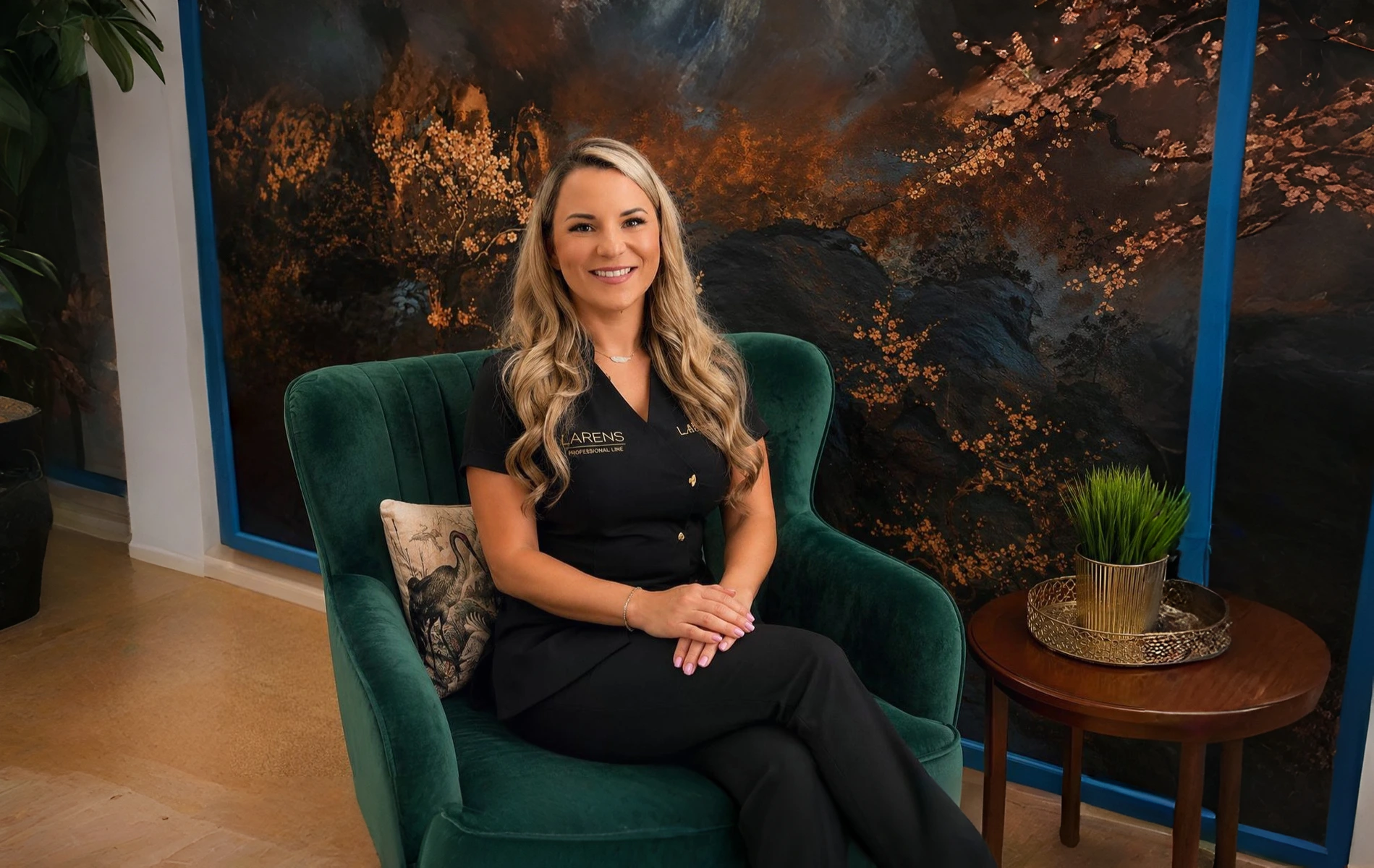
Marta trained as a beautician in Poland, years before she ever set foot in Scotland.
None of that training counted for much once she actually arrived.
For years, she worked in catering instead. Not because she’d stopped caring about beauty work. Because that’s simply where the work was.
The Career That Waited Nineteen Years
Marta moved from Poland to Scotland around nineteen years ago. Beauty had been her trade back home, something she’d trained in properly before she ever left.
In Scotland, that qualification didn’t open the same doors. She took work where she could find it, mostly in catering, for years longer than she’d ever planned to.
It’s easy to describe that as a detour. For Marta, it was simply what nineteen years actually looked like, day to day, while the career she’d trained for sat quietly on hold.
What Changed Everything
Then COVID arrived, and for a strange reason, it became the turning point.
With catering work disrupted and life slowed down everywhere at once, Marta decided to go back to college and finally finish what she’d started years earlier, properly, in the UK this time.
She didn’t wait for the course to end before acting on it either. The same day she started college, she opened her own business, treating clients with techniques she already knew from her original training in Poland.
By the time she graduated three or four years later, she already had a client base built entirely around her.
Choosing to Be the Only One Doing It
From the very beginning, Marta had one rule for herself. Whatever she trained in next, it had to be something nobody else nearby was offering.
She trained in Kobido, a Japanese-style facial massage technique that had become popular across parts of Europe but was still barely known in the UK. She travelled back to Poland specifically to learn it properly.
As far as she’s aware, she was the first person in her area to offer it at all.
She didn’t stop there. Drainage massage using wood tools. Massage designed for people going through cancer treatment. Massage built around menopause symptoms. Treatments for people who are simply overwhelmed, and need their body treated like it’s carrying that weight.
Where other local beauticians offered similar menus of the same familiar treatments, Marta kept deliberately choosing the ones nobody else had trained in yet.
The Client Who Stopped Looking at Her Phone
Ask Marta what she actually loves about the work, and she doesn’t talk about techniques.
She talks about a specific client. A woman who first came in with terrible posture, carrying visible tension, rarely smiling, phone in hand through most of the appointment.
Marta told her honestly that it would take a few sessions before she’d see real change. The woman came back weekly, three or four times.
By the fourth visit, she walked into the salon smiling. Her phone stayed in her bag the entire time.
"That made me like, wow, that makes sense,"
Marta says. It’s a small moment on paper. For her, it’s the entire reason the years of retraining were worth it.
What Nineteen Years Turned Into
Marta has been shortlisted four times across two years at the Beauty Aesthetic Awards. In 2026, it was Best Beauty Therapist and Face Lift Without Surgery. In 2027, Best Contouring Body Therapist and Iconic Signature Treatment.
That last one means more to her than the rest. The treatment behind it isn’t adapted from anyone else’s method. She built it herself, from scratch, her own blend of techniques, and it’s still only ever performed by her.
She was also named student of the year during her college training.
She has also published her own book this year, The Facial Architecture Method. In it, she teaches a non-surgical approach to facial tension, built around breathwork, tension release, and self-massage techniques clients can use at home between salon visits. It includes a five-minute morning routine, a ten-minute evening one, and a seven-day plan built around the idea that chronic tension, not just age, is often what makes a face look heavier or less lifted than it needs to.
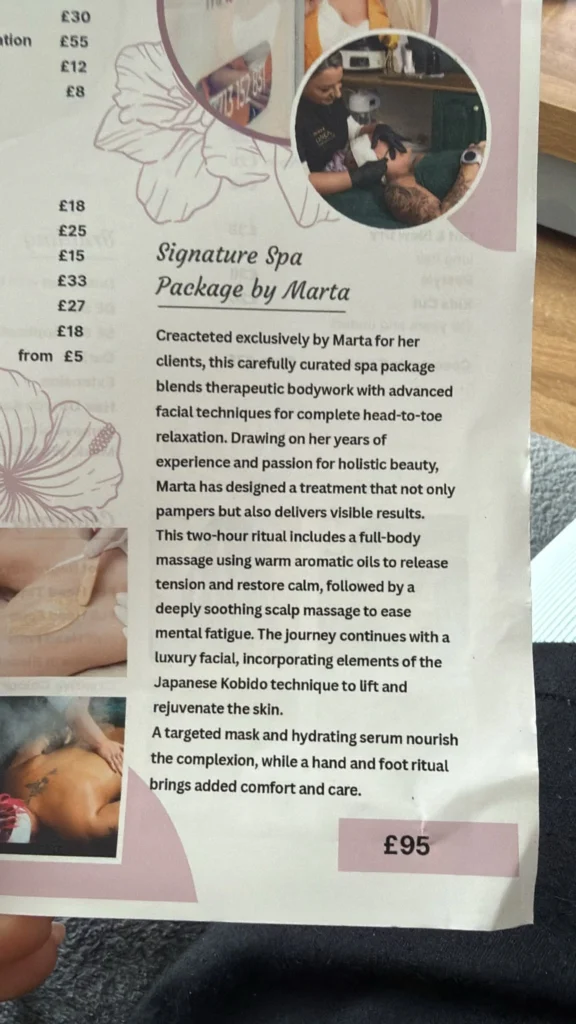
Her signature spa package now runs two hours, blending full-body massage, a Kobido-based facial, and a hand and foot ritual into a single treatment nobody else in her area offers in quite the same combination.
None of that existed nineteen years ago, when her original qualification didn’t seem to mean much of anything in a new country.
What Is the Lesson for You?
Marta’s story isn’t really about beauty treatments, or even about moving countries.
It’s about what happens to a skill you already have, when the place you land doesn’t immediately recognise it. The instinct, understandably, is to assume the skill itself has lost its value.
Marta’s version of the story suggests something different. The skill was never the problem. It just needed the right moment, and the right amount of stubbornness, to matter again.
If there’s a version of your own training or experience sitting quietly on hold right now, waiting for circumstances to catch up to it, Marta’s answer wasn’t to wait for permission. It was to start the same day she went back to learn it properly.
She still keeps a simple line in her head, one she says she’s always been tough on herself about living up to: dream, believe, achieve. Not as a slogan for the wall. As the actual reason she keeps training in something new, every time she’s tempted to stop and simply enjoy what she’s already built.
We want to hear from you.
Have you ever had to rebuild something you already knew how to do, in a place that didn’t recognise it yet?
You can find more of Marta’s work on Facebook, Instagram or on her website